Not all journeys through Portugal are the same. Some move quickly from one landmark to the next. Others are designed with intention, where each city builds on the last, and the pace allows the country to unfold naturally. A small group journey through Portugal should feel deliberate. The cities are not selected at random, and the pace is not accidental. This itinerary moves from Lisbon to Évora, through medieval towns and university cities, into the Douro Valley, and finally to Porto, revealing the country step by step rather than stop by stop. Our selection of hotels follows the same philosophy. Properties are chosen not for excess amenities, but for character, history, location, and atmosphere. Each stay places you within the fabric of the city rather than outside it, whether that means walking distance to Lisbon’s historic quarters, resting within the walls of Évora, or overlooking the river in Porto. The goal is not spectacle, but setting. Where you stay should reflect where you are. On a journey that moves through centuries of history and regional identity, the guide matters. Pedro brings both knowledge and continuity to each day, offering context that connects Lisbon to the Douro and beyond. And when the evening calls for Fado, he does not simply explain it. He sings it. It is a reminder that Portugal’s traditions are not performed for visitors. They are lived, carried forward with quiet pride.


Lisbon: The Beginning of Our Small Group Portugal Tour
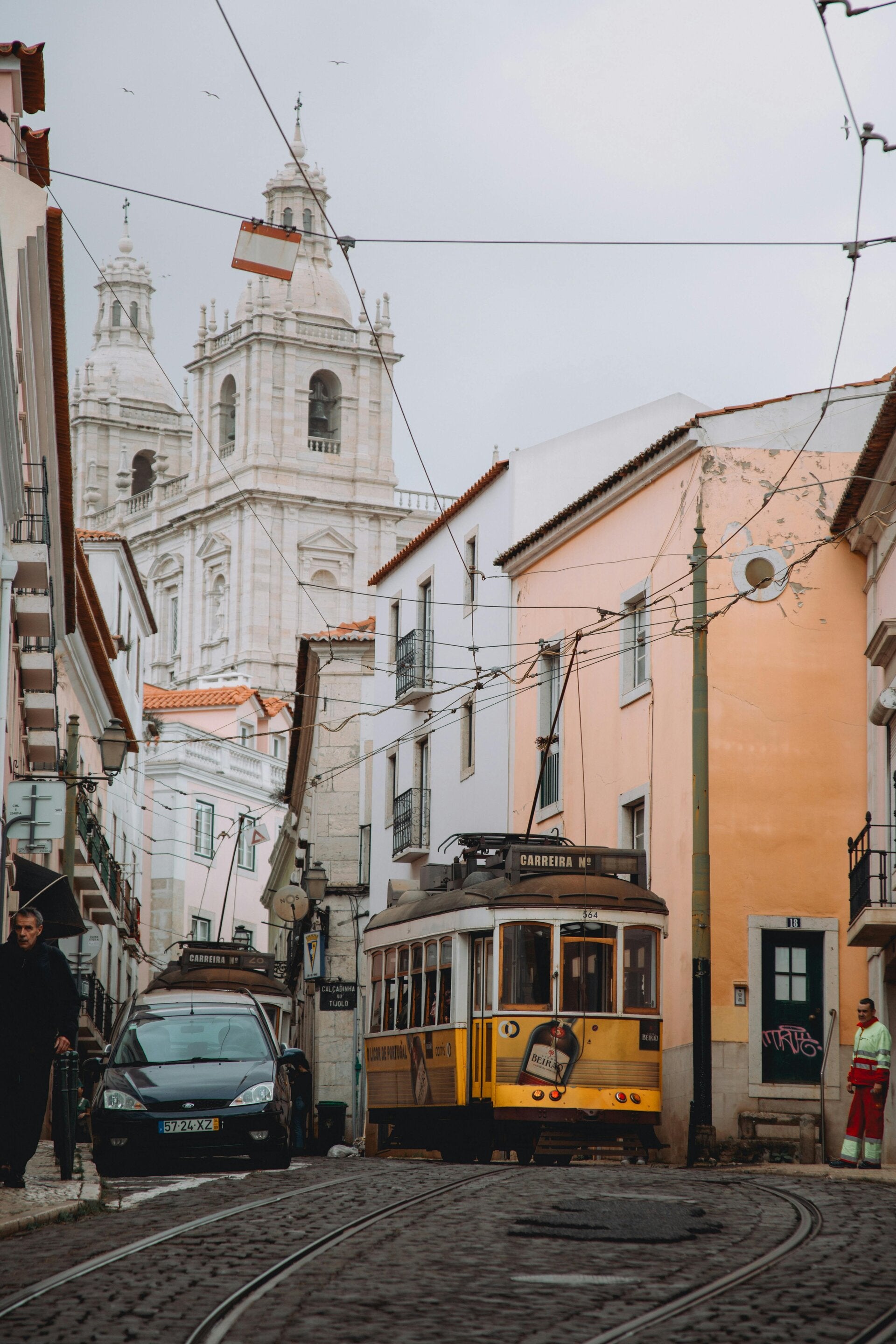
Lisbon is not rushed. With multiple nights in the city, you are not simply passing through. You begin with a welcome drink and dinner, settling into the rhythm of the capital before exploring it in depth. A guided morning introduces you to Lisbon’s layered history, including Belém and the 16th-century Jerónimos Monastery, a monument to Portugal’s Age of Discovery and a UNESCO World Heritage site. Lunch is taken at a local seafood restaurant, reflecting the country’s deep relationship with the Atlantic. From there, the experience shifts from monument to daily life. In Alfama, the city’s oldest district, you walk streets that have carried generations before you and visit the Tile Museum to understand the story of Portuguese azulejos. A stop at a local market for Pastéis de Nata is not a staged tasting but part of how Lisbon is actually enjoyed. A day trip to Sintra brings you to the 19th-century Pena Palace, followed by the coastline and the fishing village of Cascais. There is time to stroll the promenade, sit in a seaside café, and return to Lisbon with the evening still your own. Rua Augusta, open-air shops, and café terraces remain available to you without pressure or schedule. For many travelers, this would already feel like a complete Portuguese holiday. Here, it is only the beginning.

Évora Tradition & the Heart of Alentejo
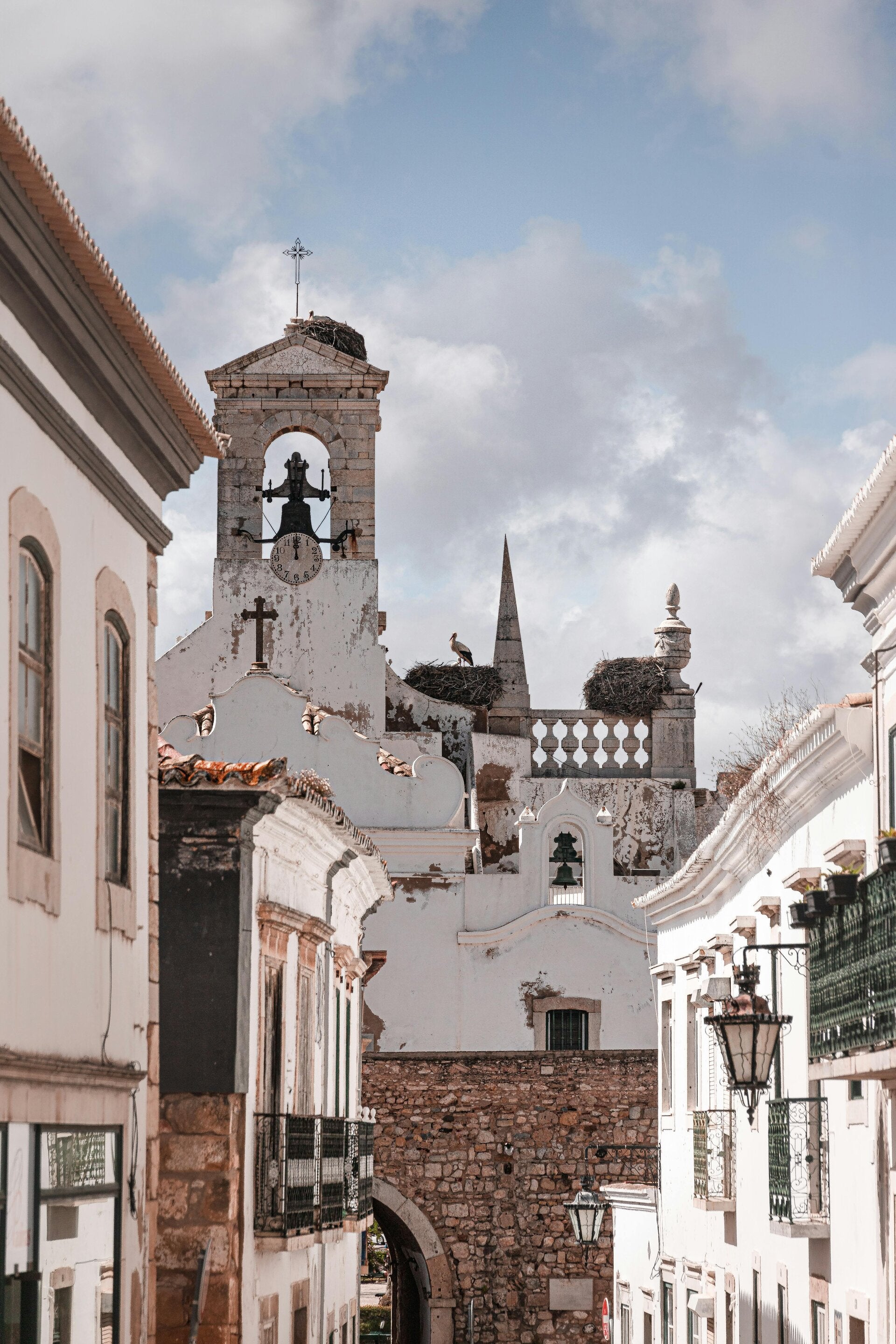
Leaving Lisbon, the landscape opens into the Alentejo. Olive groves, cork trees, wide skies. The rhythm changes. Évora is a UNESCO World Heritage site and one of Portugal’s best-preserved historic towns. Within its walls, you visit the 12th century cathedral and the Chapel of Bones, both powerful reminders of how deeply history runs here. Roman columns, medieval streets, and quiet squares remain part of daily life. While in Évora, you spend time in the kitchen with our friend Sofia. This is not a demonstration from a distance. The group gathers around her table, prepares traditional Alentejo dishes together, and shares the meal as it is meant to be shared. Recipes are explained, techniques are shown, and stories are told. It is one of the moments guests speak about long after returning home. On the way north, you pass through medieval Óbidos and continue to Coimbra, home to a 13th-century university that has shaped Portuguese intellectual life for generations. The scale of history here is unmistakable. Évora grounds the journey. It shows Portugal as it has been lived for centuries.
Porto: Portugal’s Finale
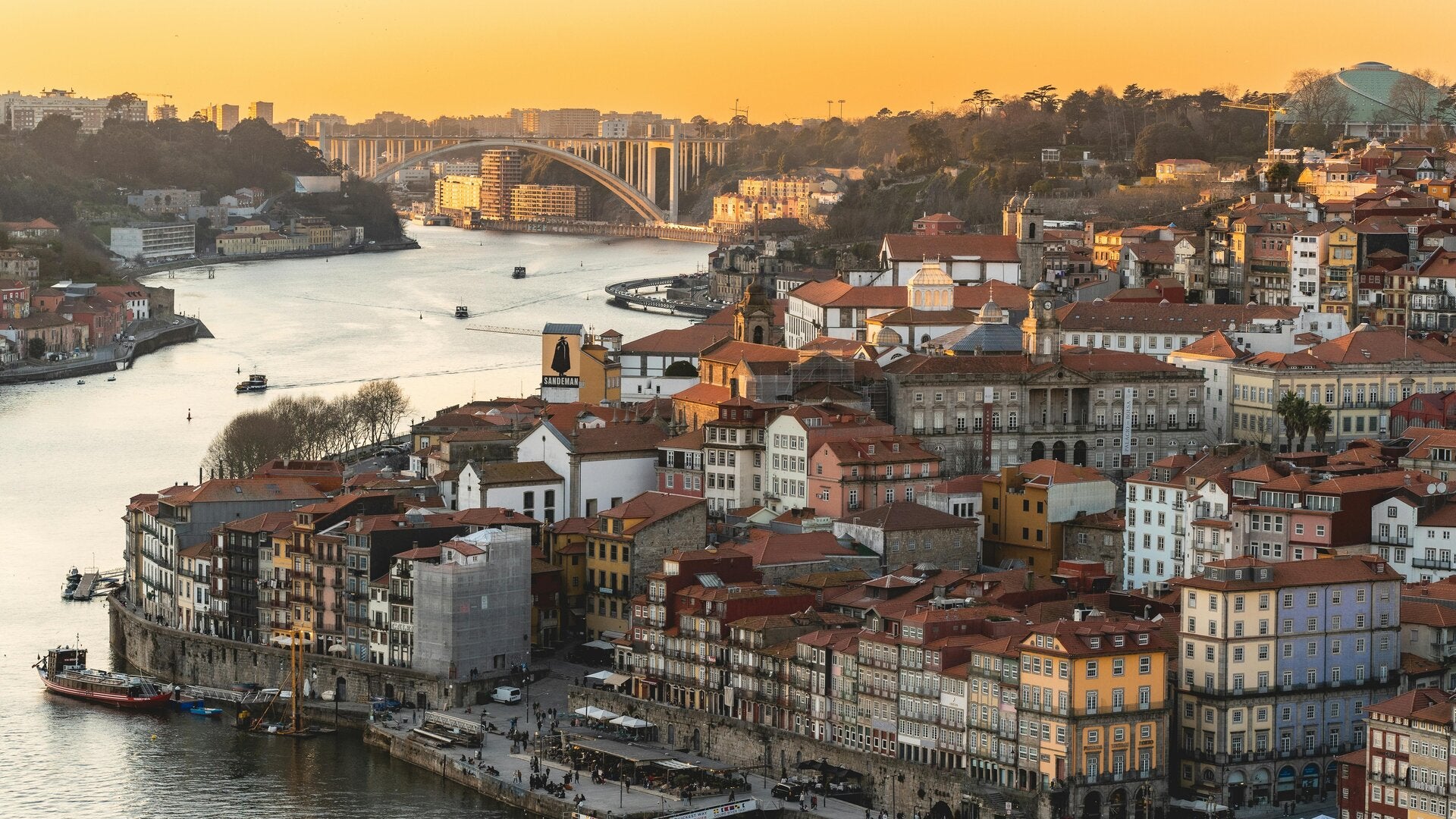
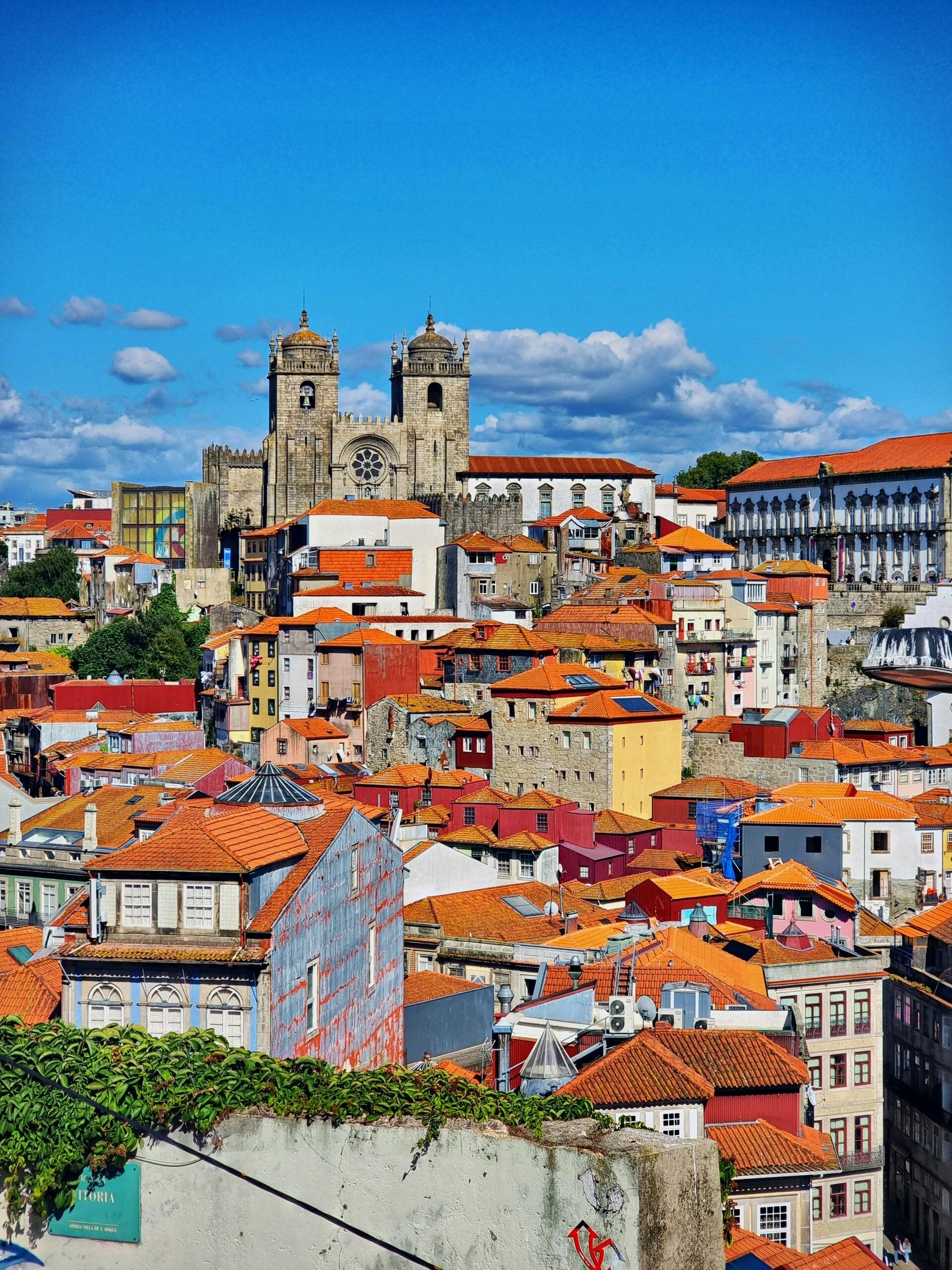
Porto is the final chapter of the journey, and it carries both weight and ease. With three nights here, there is time to experience the city without rushing through it. You explore Porto’s historic center, including the Stock Exchange Palace and the richly gilded Church of São Francisco, both reflections of the city’s wealth and maritime influence. Along the Douro River, the promenade offers space to walk, sit, and observe daily life unfolding beside the water. A cruise through the canals aboard a traditional moliceiro boat offers a different perspective of the region’s relationship with trade and the river itself. Café culture is strong here, and time is intentionally left open to enjoy it, whether that means lingering over coffee or exploring the streets independently. Evenings in Porto include Fado, not as background music but as a living expression of Portuguese identity. The journey concludes with a farewell dinner accompanied by local wine, marking the end of a beautiful journey.
Small Group Portugal Tours with Secret Italia
People often ask what our tours are really like. We can share itineraries, and you can see the photography. But the real question is what it feels like. From the moment you step off the plane and are welcomed by your driver, to the hotel that has prepared a room with you in mind, to the final evening when breakfast and transportation are already arranged, you are cared for. The details are handled before you think to ask. Your guide understands balance. There is space when you want to explore independently, context when you want a deeper understanding, and quiet assurance that nothing important will be missed. You are never rushed, never left wondering, never navigating alone. This is a journey designed with structure and intention. The experience remains authentic to Portugal, but it unfolds with clarity and ease. The result is not spectacle, but confidence. You travel knowing the dream will be carried through properly, from beginning to end. You can find more information about our Portugal Tours here.
Our thanks to writer Julianna Nasif for crafting this blog article

Guimarães & the Douro: Where Portugal Was Born
As the journey continues north, the narrative of Portugal becomes clearer. Guimarães is widely regarded as the birthplace of the nation, a city where medieval foundations shaped what would become modern Portugal. Its preserved historic center, a UNESCO World Heritage site, reflects that legacy in stone and structure. On the way, you visit the elegant Mateus Palace, still in the hands of the original family, a reminder that heritage here is not symbolic. It is maintained. In the Douro Valley, you are welcomed at a traditional Quinta for lunch paired with regional wines, rooted in a landscape that has produced them for centuries. The experience continues aboard a private rabelo boat along the Douro River, once used to transport barrels of Port to the cellars of Porto. A visit to Braga brings you to the Baroque Bom Jesus Sanctuary, a masterpiece of design and devotion that rises above the city with commanding presence. Each stop builds upon the last, revealing a country formed through faith, commerce, and resilience.
Add comment
Comments